


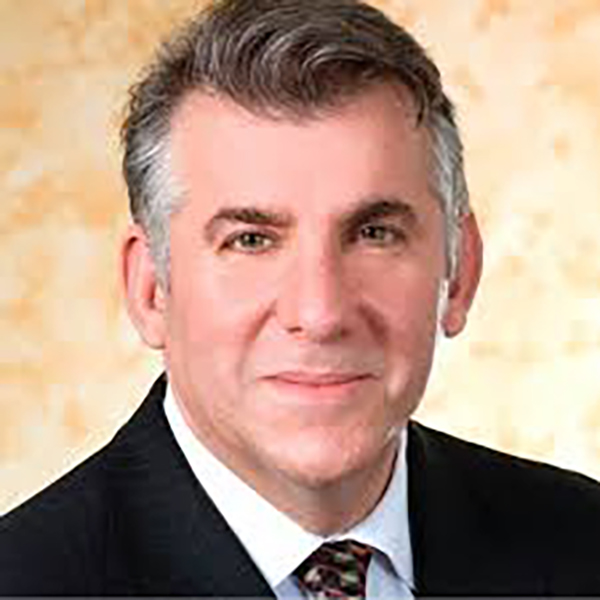
What is your background?
I am an engineer and systems scientist with a career focused on the reliability, security, and resilience of complex systems. I was born at the American Hospital in Tabriz, Iran, near Mount Ararat, and came to the United States in August 1978. I finished high school in New York and went on to study at the University of Massachusetts Amherst and Washington University in St. Louis, where I primarily focused on three areas:
- Defense networks, combat & logistics systems – Command, Control, Communications, Computers, and Intelligence (C4I), IVHS, and Intelligent Transportation Systems (1982-1997),
- Modernization, efficiency, security & resilience of interdependent national critical infrastructures, including power, energy, communications, finance, and transportation (1997-present), and
- Technology/business/policy assessment, foresight & strategy (1997-present).
In January 1998, I joined the Electric Power Research Institute (EPRI) in Palo Alto, where I led research on interdependent infrastructures — power, telecommunications, transportation, finance, and defense. In 1998, I pioneered smart‑grid research and, after the September 11 attacks, directed all security-related R&D for North American utilities. This work produced 36 technologies transferred to industry and introduced the concept of “self-healing” infrastructure.
In 2003, I joined the University of Minnesota as the Honeywell H.W. Sweatt Chair in Technological Leadership. I built graduate programs in security technologies and medical‑device innovation, mentored thousands of engineers and executives, and served on National Academy boards. Today, I chair Energy Policy & Security Associates and serve as CTO of Renewable Energy Partners. My focus remains on combining foresight, ethics, and disciplined execution to build resilient, equitable systems.
What are the most profound changes you have seen in your field?
Two shifts stand out. First, critical systems that once operated independently now function as cyber-physical‑social networks. Data and automation link electric grids, finance, transportation, and healthcare; a disruption in one sector can ripple across the globe. Second, energy generation is moving from centralized fossil‑fuel plants to distributed renewables and microgrids. This transition requires new models for operations, markets, and security. Alongside these shifts, public expectations have changed — ethics, privacy, and social license are no longer afterthoughts.
 What motivated you to write Technological Leadership?
In boardrooms and control rooms, I kept hearing the same problem: leaders use many tools — SWOT, scenario planning, balanced scorecards — but lack a coherent way to connect them. Crises such as blackouts, cyber‑attacks, and pandemics showed how misaligned decisions can cascade across infrastructure. I wrote this book to provide a disciplined sequence that integrates proven methods with ethics and foresight. It is a field guide for leading through complexity while honoring human dignity and sustainability.
Who is the primary audience?
The book is for practitioners who must make high-stakes decisions in the face of uncertainty. That includes engineers, project managers, and executives in energy, telecom, transportation, and cybersecurity; public officials responsible for infrastructure and emergency management; and educators and graduate students preparing for those roles. It is also for nontechnical leaders who need to understand how technology, policy, and ethics interact.
What are the key challenges this audience faces?
They face an environment where complexity is accelerating. Every critical function relies on secure infrastructure, yet those infrastructures are increasingly interdependent and vulnerable. Regulatory frameworks lag behind technological change, and siloed organizations struggle to see systemic risks or opportunities. Balancing short-term pressures with long-term sustainability, while maintaining trust and legitimacy, is difficult.
How does your book solve these challenges?
The book offers an end-to-end sequence. It begins with purpose — clarifying goals through “Start with Why” and the Heilmeier Questions. It then moves to environmental scanning (PESTEL, macro‑forces), internal assessment (SWOT/TOWS, VRIO, value chain), and option framing (scenario planning, Business Model Canvas, Real–Win–Worth screen). Direction is set through balanced scorecards and OKRs; alignment is achieved through McKinsey 7S and change management models; and design thinking, innovation frameworks, and PDCA cycles drive execution. The closing steps emphasize review and renewal — capturing lessons, stress‑testing with foresight, and rebuilding trust. Each tool is backed by case studies and checklists, and companion materials support deeper learning.
What have been the biggest rewards?
The greatest reward is seeing people use these ideas to produce tangible results. Graduates of the programs I’ve led now run utilities, launch companies, and lead government agencies. They tell me the sequence helped them step back from technical details, engage stakeholders, and build strategies that endure. At the societal level, it has been gratifying to watch smart-grid concepts move from theory to deployment, improving reliability and enabling renewable energy. Many of the managers and executives I have mentored have accelerated to leadership roles. Knowing that the work has strengthened infrastructure and built public trust is deeply satisfying.
What unique features make the book stand out?
It integrates disciplines that are rarely combined — systems engineering, ethics, innovation management, and resilience science — and treats trust and legitimacy as design constraints. Rather than offering a menu of methods, it presents a logical sequence so readers know when and why to use each tool. It draws on decades of casework across sectors and cultures, from North American grid modernization to microgrid initiatives that embody the “think globally, act locally” ethos. Unique frameworks such as Global Transition Dynamics and Real–Win–Worth assessments are incorporated alongside traditional strategy tools. A robust companion site provides summaries, study questions, and teaching materials.
What current projects are you working on?
I am helping cities and utilities deploy microgrids and storage in underserved communities, emphasizing workforce development and equity. Through EPS Associates and Renewable Energy Partners, I advise national labs and regulators on AI governance for critical infrastructure. I am also completing a manuscript that extends the themes of technological leadership into finance and public governance. Beyond writing, I continue to teach advanced courses and mentor executives.
What problems are you trying to solve?
Three challenges drive my current work. First, how to accelerate the clean energy transition without sacrificing reliability or social justice: smart grids could cut CO₂ emissions dramatically by 2030, but only if the benefits are shared. Second, how to protect critical infrastructure from cyber and climate threats: a self-healing grid equipped with sensors, communications, and automation can minimize outages and defend against sabotage. Third, how to restore public trust in science and technology. Engineers and scientists have a duty to share their insights with policymakers and citizens.
What sequence of tools can leaders use to move from purpose to results under uncertainty?
Start by clarifying purpose with “Start with Why” and the Heilmeier Questions. Scan the environment using PESTEL and macro‑force field analyses. Assess internal strengths using SWOT/TOWS, VRIO, and value chain analyses. Frame options through scenario planning and the Business Model Canvas; filter them using Real–Win–Worth and recommendation tables. Set direction with balanced scorecards and OKRs; align people and structures using the 7S model and change frameworks. Execute through design thinking, innovation frameworks, and PDCA cycles. Review and renew by capturing lessons, stress‑testing with foresight, and rebuilding trust. This cycle provides a disciplined path from purpose to results without losing sight of ethics and sustainability.
Where can we find you online?
I maintain pages at eps‑associates.com and massoud‑amin.umn.edu. I also post regularly on LinkedIn (linkedin.com/in/massoudamin). These links provide additional context and examples of how the book’s ideas have been applied. My IEEE author page and some articles are accessible online, on IEEE Xplore; my work and interviews are available at several locations, including:
- Wikipedia biography:https://en.wikipedia.org/wiki/Massoud_Amin
- TEDx talk “Powering Progress: Smart Infrastructure and the Future of Cities” – https://www.youtube.com/watch?v=CurJGL_aqYA
- IEEE Smart Grid interview on the initiative’s vision and mission – https://smartgrid.ieee.org/about-ieee-smart-grid/history/videos/massoud-amin-an-interview-about-ieee-smart-grid-s-vision-mission-and-community